The weeks leading up to this year’s solstice were particularly dark this year. The Connecticut shooting came days after I lost my grandfather, the second grandparent to pass away this year. A dear friend’s father was admitted to a hospice for his final days after losing a year long battle with cancer. Personal relationships were strained. It seemed there was just too much sadness in the world.
Winter solstice is the deepest darkness. It is Robert Frost’s lament in Stopping by the Woods on a Snowy Evening. It is the point when night almost seems to take over, when the sweetness of strawberries in summer seems more like a distant dream than a memory. And yet for thousands of years, winter solstice has been a time of celebration. In that moment when all we want to do is hibernate and leave the world behind, our species choses to come together and remember the light, remember that with each passing day things will get better. In times when tropical fruits were not flown in from foreign lands, when livestock got skinny and firewood was rationed, neighbours would share their meagre supplies and feast for any number of reasons, perhaps just to remember that they were not alone.
The morning of solstice came and I did not feel much like celebrating. I got on my bike and made my way to campus, almost enjoying the biting cold as a distraction from my thoughts. In my office, I found no joy in the work at hand, I wrestled with WordPress and made little progress. Even CBC Radio2 brought little joy with the incessant discussion of the impeding end of the world, as predicted by the Mayan calendar. By the time I got home, I had a bad case of the Negative Nancy Pants and wanted nothing more than to crawl into bed and stay there until equinox. Out back, Honey the blue leghorn was clucking loudly at the other chickens from the door of the coop, and I wondered if there had been a cat around. Stupid cats, causing trouble again, I thought grumpily. I opened up the coop to make sure everything was in order, and almost missed the perfect white egg nestled in the straw. It was not just any egg though, it was the first egg. We had gotten the hens as pullets at the end of August, hoping they’d reach maturity and start producing before the chill of frost set in and their bodies fell into the winter habit of rest. For weeks we had expectantly opened the coop each morning, checking for eggs in nest boxes where we had placed golf balls to show the hens where to lay. Disappointed, we had accepted that perhaps for now the chickens were simply a strange sort of pet. We taught them to jump, allow us to pet them, and rush to the fence when we come by in hopes of a treat.
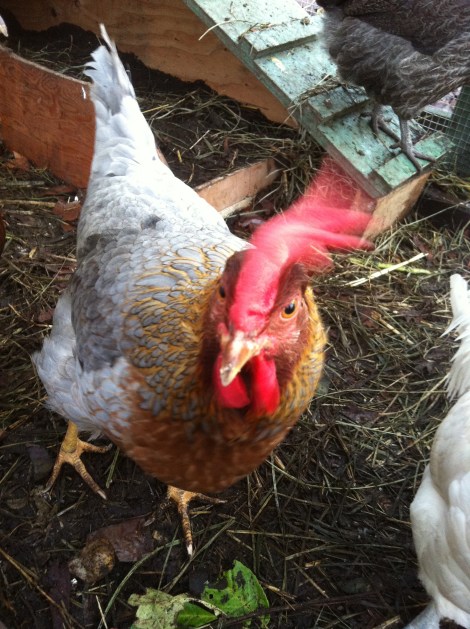
Honey the laying hen. Photo by author.
That one egg on the darkest day may as well have been made of gold. It carried the wisdom of nature, that easily forgotten truth that life keeps on going. I picked up the egg, still warm, and was overwhelmed with gratitude for this one thing which I had no control over. I felt the meaning of Wendell Berry’s words when he described coming “into the peace of wild things who do not tax their lives with forethought of grief“. Honey does not know what tomorrow will bring, and she has all but forgotten the time we snuck into the coop at night to pry open her beak and pour antibiotics down her throat when she was sick. All she knows is that she must lay her eggs somewhere safe, and I am humbled that she has deemed the coop we built her as a fine enough nest. Before bringing the egg inside, I scooped up a handful of scratch and sprinkled it in the run, watching as the hens pecked up every last morsel before huddling into the coop as the longest night fell.
 Soil in the City